
Many families fear a dementia diagnosis more than almost any other medical news. The word itself carries emotional weight—loss of independence, difficult care decisions, and worries about finances and family conflict. Unfortunately, avoiding or delaying a diagnosis often makes things worse, not better.
From an elder law perspective, delayed action can quietly eliminate options that families later wish they had. The earlier planning happens, the more control—and peace of mind—you retain.
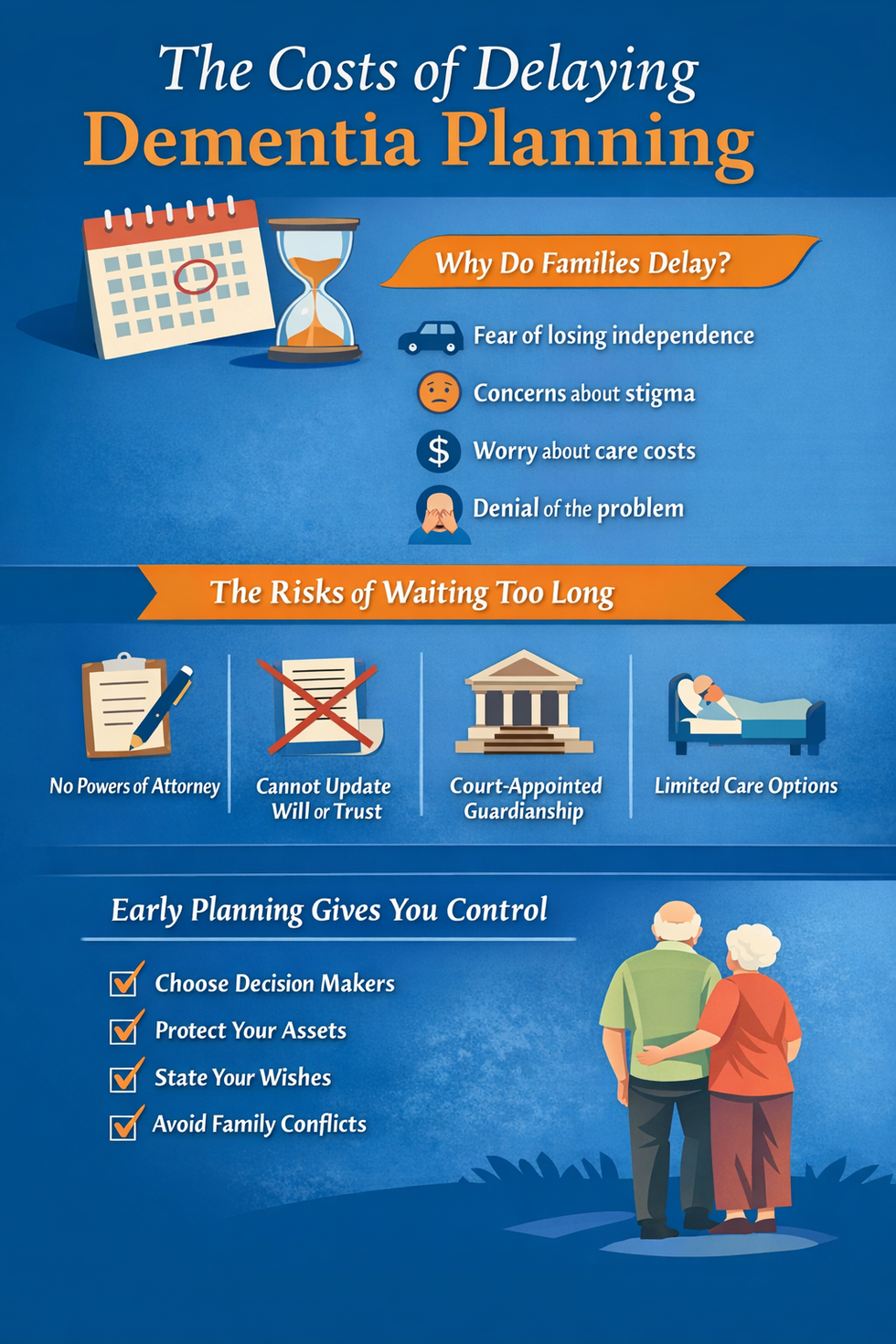
Why Families Delay a Dementia Diagnosis
In my experience, families often sense something is wrong long before a formal diagnosis is made. Missed bills, repeated questions, confusion with medications, or subtle personality changes may be brushed off as “normal aging.”
Common reasons people delay evaluation include:
- Fear of losing independence or driving privileges
- Worry about stigma or labeling
- Concern that “nothing can be done anyway”
- Anxiety about cost of care and long-term planning
But dementia does not wait for families to feel ready. While symptoms progress gradually, legal capacity can change suddenly.
The Legal Risk of Waiting Too Long
From a planning standpoint, the most serious risk is loss of legal capacity. Once a person can no longer understand and sign documents, certain planning tools may no longer be available.
Delays can lead to:
- No valid powers of attorney for finances or health care
- Inability to create or update a trust or will
- Court-ordered guardianship or conservatorship, instead of private family decision-making
- Fewer Medicaid planning options if long-term care becomes necessary
In Michigan, capacity is task-specific, but once a physician documents significant cognitive impairment, it becomes much harder—and sometimes impossible—to complete legal planning.
Early Diagnosis Creates Planning Opportunities
A timely diagnosis does not take control away—it often preserves it.
When planning is done early, individuals can:
- Choose who will make decisions if they later cannot
- Clearly express wishes about medical care, living arrangements, and finances
- Structure assets to protect a spouse or family members
- Reduce future conflict by making intentions explicit
These steps are far more effective when the individual with early-stage dementia can participate meaningfully in decisions.
Dementia Planning Is Not Just About Documents
Good planning goes beyond paperwork. It involves conversations—often difficult ones—about:
- When help should be accepted
- Who should step in, and under what circumstances
- How finances should be managed as abilities change
- What quality of life means to the person affected
When these discussions happen early, families are better prepared emotionally and practically when changes occur.
A Michigan-Focused Reality
Michigan families face unique challenges, including long waiting lists for certain community-based services and strict Medicaid eligibility rules. Planning ahead allows families to coordinate legal strategies with medical and care decisions under Michigan law, rather than reacting in crisis mode.
Waiting until there is an emergency often means fewer choices and higher stress for everyone involved.
The Bottom Line
Avoiding a dementia diagnosis does not stop dementia. It simply shortens the window for thoughtful, private planning.
Early evaluation, combined with proactive estate and elder law planning, allows individuals to remain in control of their future for as long as possible—and helps families avoid unnecessary court involvement, conflict, and financial strain.
If you or a loved one are noticing early signs of cognitive change, now is the time to ask questions, gather information, and plan—not later, when options may already be gone. My elder law practice helps individuals and families plan ahead before options are lost.
If you would like answers to your questions and help thinking through next steps—whether that involves legal planning, future care needs, or both—you can contact my Troy elder law office at (248) 469-4261 or by using the contact form on this website. We will start with a brief telephone call to understand your situation and confirm that it is something I can help with. If it makes sense, you can then decide whether to schedule a more in-depth consultation.

Comments
There are no comments for this post. Be the first and Add your Comment below.
Leave a Comment